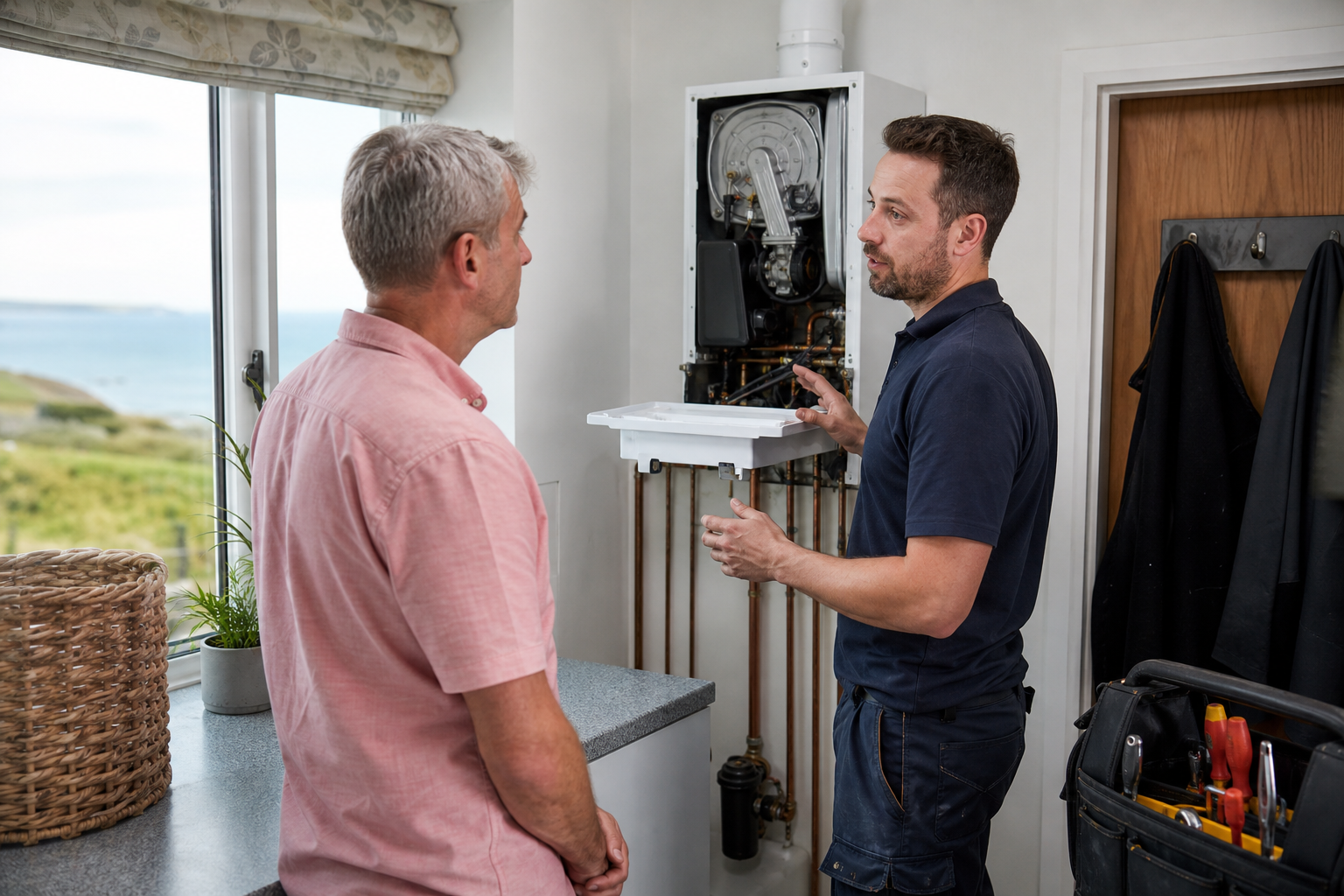
Air Source Heat Pumps Cornwall: Are They Right for Off-Grid Homes?

If you are researching air source heat pumps Cornwall because your off-grid home currently relies on oil or LPG, the most important question is not whether heat pumps are in demand. It is whether one is the right fit for your property. For off-grid homes, the answer depends on insulation, heat demand, radiator sizing, hot water requirements and how the current heating system performs day to day.
At Eco Dragon South West Ltd, based in Nanpean, St Austell, we install and maintain air source heat pumps and also work on LPG and oil-fired heating systems for off-grid properties. That matters because good advice starts with the property itself, not with a one-size-fits-all recommendation. If you are comparing options, you can learn more about our air source heat pump services and broader heating support on our website.
Air source heat pumps Cornwall: why off-grid homes are considering them
Off-grid homeowners often want to reduce reliance on delivered fuel, improve efficiency and move towards a lower-carbon heating system. An air source heat pump can be an attractive option because it uses electricity to transfer heat from the outside air into your home, rather than burning oil or LPG on site.
That said, an air source heat pump is not automatically the right choice for every rural or off-grid property. Some homes are very well suited to one. Others need upgrades first. And in some cases, another heating route may be more practical.
The key is understanding suitability before you commit. A properly designed system can deliver consistent comfort and reliable hot water. A poorly matched system can lead to disappointment, higher running costs and avoidable remedial work.
How an air source heat pump works in an off-grid property
An air source heat pump does not work in the same way as a traditional boiler. Instead of creating high-temperature heat quickly, it works most efficiently by supplying steady, lower-temperature heat over longer periods.
In practical terms, that usually means:
The home needs to hold heat reasonably well.
Radiators or underfloor heating need to be suitable for lower flow temperatures.
Hot water storage is an important part of the system design.
Controls and settings need to be set up correctly for the property.
This is why a heat pump should never be treated as a simple like-for-like swap for an oil or LPG boiler. The success of the system depends on the design, not just the unit itself.
When an air source heat pump can be a strong choice
1. The property has reasonable insulation levels
Heat pumps tend to work best when the property can retain heat effectively. That does not mean only new-build homes are suitable, but insulation standards do make a difference. Loft insulation, sensible draught reduction and well-performing windows and doors can all support better results.
2. The heat emitters are suitable or can be upgraded
Some off-grid homes already have radiators that are large enough to work well with a heat pump. Others may need radiator upgrades, system balancing or wider heating improvements. Underfloor heating can also pair well with a heat pump, but it is not the only option.
If you are planning wider improvements, it makes sense to look at the whole system together. Our team also supports central heating installation and heating system upgrades, which helps create a more joined-up approach.
3. You want to move away from fuel deliveries
For many off-grid households, one of the main attractions is reducing dependence on scheduled oil or LPG deliveries. A heat pump offers a different way to heat the home, which can be appealing if you want more control over your energy strategy.
4. You prefer steady, efficient heating
Heat pumps are often well suited to households that want even, consistent warmth rather than short bursts of very high heat. When the property is suitable and the controls are set correctly, the result can feel comfortable and stable throughout the day.
When an air source heat pump may not be the right choice
1. The home loses heat too quickly
If the property has significant heat loss, a heat pump may struggle to perform as intended unless fabric improvements are made first. Older off-grid homes can absolutely be suitable, but only after the heat loss picture has been properly assessed.
2. The existing system is undersized for lower-temperature heating
A home that depends on small radiators and high boiler temperatures may need more than just a unit replacement. Without the right emitter capacity, the system may take longer to heat the space or fail to maintain the level of comfort you expect.
3. There is limited space for the wider system setup
Heat pump projects often need enough space for the outdoor unit and, in many homes, a hot water cylinder or associated system components. Space constraints do not rule a project out automatically, but they do need to be part of the decision from the start.
4. Your expectations are based on boiler-style heating
One of the biggest issues with poorly planned heat pump installations is not the technology itself but the expectation that it will behave exactly like an oil or LPG boiler. Heat pumps can work very well, but they need to be designed and operated in the right way.
5. The property needs a different solution right now
Sometimes the right answer is not to rush into a heat pump. If the home first needs insulation work, radiator upgrades or wider system improvements, that should be addressed before installation. Because we also support oil heating services, boiler replacements and boiler servicing and repair, we can look at off-grid heating more broadly and help you plan the next sensible step.
What a proper suitability survey should include
If you are seriously considering an air source heat pump, the survey stage is where the right decision is made. A meaningful assessment should look beyond the headline question of whether you like the idea of a heat pump.
A thorough survey should review:
Heat loss: how much heat the property needs to stay comfortable.
Insulation and fabric: whether the home retains heat efficiently enough.
Radiators or underfloor heating: whether the emitters are suitable as they are or need upgrading.
Hot water requirements: the household's usage patterns and storage needs.
Pipework and controls: whether the existing system can support the new setup.
Outdoor unit location: practical installation considerations around the property.
Your current heating system: what is working, what is not, and what you want to improve.
This is also the stage to discuss comfort expectations, daily use and long-term plans for the property. If you are renovating, extending or improving insulation, those decisions can materially affect whether an air source heat pump is the right move now or later.
Why local off-grid experience matters
For off-grid homes, experience across multiple heating types is valuable. At Eco Dragon South West Ltd, we install and maintain air source heat pumps, and we also provide LPG and oil-fired heating support for off-grid properties. That means we understand the practical differences between systems rather than viewing every home through a single technology lens.
We are based in Nanpean, St Austell, and have been established since 2006. Our team provides plumbing, heating and renewable solutions with a focus on reliable workmanship, honest advice and energy-efficient outcomes. We are also associated with OFTEC, and our qualifications include a Level 3 NVQ Diploma in Domestic Plumbing and Heating.
If you want to compare options with a local team that understands both renewable heating and traditional off-grid systems, visit Eco Dragon South West Ltd to take the next step.
Frequently asked questions
Are air source heat pumps suitable for older homes in Cornwall?
Yes, some older homes can be suitable, but age alone does not decide the outcome. The key factors are heat loss, insulation levels, radiator sizing, hot water setup and the overall condition of the heating system. A proper survey is the best way to assess an older property accurately.
Can an air source heat pump replace an oil boiler in an off-grid home?
In many cases, yes, but it is not a direct swap in every property. Replacing an oil boiler with a heat pump may also require emitter upgrades, changes to controls or other heating improvements. The right answer depends on the home's design and heating demand.
Do I need underfloor heating for an air source heat pump?
No. Underfloor heating can work very well with a heat pump, but it is not essential. Many systems operate successfully with radiators, provided they are correctly sized and the system is designed properly.
Will an air source heat pump definitely lower my heating bills?
Not automatically. Running costs depend on the property's efficiency, the quality of the system design, electricity tariffs, control settings and how the system is used. That is why suitability and design matter so much.
What if my home is not suitable for a heat pump right now?
That does not mean the idea is off the table forever. In some homes, the best next step is to improve insulation, upgrade emitters or review the wider heating system first. We can help you understand what would need to change before a heat pump becomes a practical option.
Conclusion
So, are air source heat pumps the right choice for off-grid homes in Cornwall? Sometimes yes, and sometimes not yet. The right answer comes from assessing the property properly, understanding how the home uses heat, and matching the system to real-world conditions rather than assumptions.
If you are considering a switch from oil or LPG, book a heat pump suitability survey with Eco Dragon South West Ltd. We will assess your home, explain the key considerations clearly and help you decide whether an air source heat pump is the right option for your property. To get started, visit our website and request your survey.